

A children’s music method for learning music in a natural way.
Diapason the Wizard is our own children’s music method and early childhood music education approach, designed to teach music to babies and young children from the earliest months.
Through play, singing, movement and active listening, children develop aural skills, rhythm and musical language in a structured yet natural way that respects how they learn and grow.
.

Children’s music method
What is a children’s music method?
A children’s music method is an organised and progressive approach to early childhood music education. It is not simply a collection of songs, games or activities: the content is arranged with intention so that each learning step prepares the next and the child can progress with confidence.
When we talk about early ages, that organisation is even more important. A baby or young child does not learn music by sitting through a theoretical explanation. They learn by listening, imitating, singing, moving, experimenting and repeating. For that reason a good music method for young children must transform musical content into experiences appropriate to their age.
That’s what we do at Diapason the Wizard. We teach music to babies using our own methodology that combines play and genuine musical learning. The activities are fun, but not chosen at random: behind every song, movement and game there is an objective related to listening, rhythm, voice, coordination or musical language.
In short
The child feels they are coming to sing, move and play. The teacher knows which musical skill they are working on and how that activity fits into a wider learning process.
A natural way to learn
Learning music the way a child learns their mother tongue.
Before a child reads a word, they have spent a long time hearing it. With music we can build learning following a similar logic.
Children learn to speak surrounded by language. They hear it again and again, recognise sounds, imitate, make mistakes, try again and gradually begin to express themselves. Nobody starts by teaching them grammar. First they live the language and, much later, they learn to read it and understand its rules.
At Diapason the Wizard we start from a similar idea: experience music first, then explain it.
This does not mean giving up musical language. On the contrary: it means preparing the ground so that, when it arrives, it makes sense. Reading, the notes, note values, the staff or clefs do not appear as isolated symbols but are linked to experiences the child already knows.
In this way, early childhood music education is not divided between ‘play’ and ‘learning’. Play is the means through which the child can learn genuine musical content, with a sequence designed for their age.
From the very first classes
What do we work on in our children’s music method?
Music brings together many skills at once. That’s why our classes combine listening, voice, rhythm, movement and musical language rather than treating them as separate areas.
Aural development
Listening, intonation, auditory memory, recognition of pitch, timbre and short musical patterns.
Rhythm
Pulse, duration, coordination, imitation and the ability to anticipate and reproduce rhythmic structures.
Voice
Singing, intonation, breathing, musical memory and using the voice as the first instrument.
Movement
Psychomotor skills, laterality, coordination and the relationship between what is heard and the body’s response.
Ear training
A progressive foundation for understanding notes, note values, the staff, clefs and, later, reading the first scores.
“
At Diapason the Wizard the child does not receive music: they listen to it, sing it, move to it, play it and live it. This is how they begin to make it their own.


Early musical stimulation
Aural development begins long before learning to read music.
One of the most important features of the Diapason the Wizard Music Method is the attention we give to aural development from a very early age. For a musician, learning to listen is as important as learning to read a score or play an instrument.
In classes for babies and young children we develop listening through the voice, songs, sound contrasts, repetition, recognition and imitation. Gradually, the child learns to pay attention to differences of pitch, duration, intensity and timbre and to respond musically to them.
Babies are exposed to sounds and voices before birth and, after birth, show a strong sensitivity to voice, rhythm and intonation. Making use of that stage does not mean accelerating learning, but offering a rich musical environment appropriate to their development.
For this reason we talk about early musical stimulation: ear, rhythm, voice and play within a safe, nurturing and well-prepared environment so that the child enjoys music from the start.

Learning by making music
Music is best understood when first experienced.
In a children’s class there are moments for listening, singing, moving, playing, observing and imitating. Each child participates in their own way, but everyone is building experiences they can later relate to more complex musical concepts.
This way of working means learning does not rely solely on explanation. The child recognises sounds because they have heard them many times, understands a rhythm because they have felt it with their body, and approaches musical notation after having experienced what is written.
That’s why at Diapason the Wizard we place such emphasis on making music before theorising about it. The aim is for concepts to have meaning and for learning to preserve the natural curiosity of childhood.
The origins of the method
A methodology developed to teach music to two children from birth.
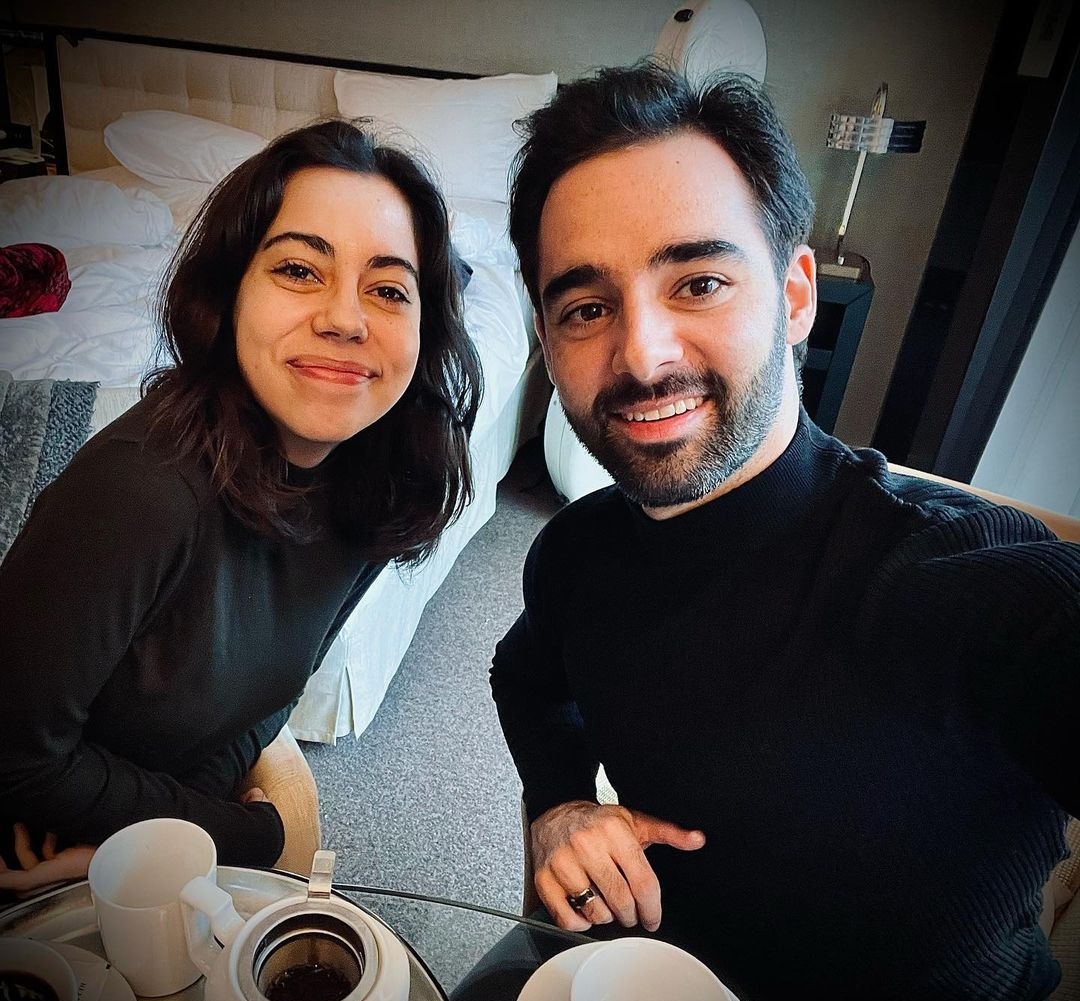
The Diapason the Wizard Musical Method was created by Paqui Castro out of a very specific need: she wanted to teach music to her own children from when they were babies. To work with such young children she needed short, dynamic classes capable of holding their attention without sacrificing quality musical content.
From that experience a methodology was born that grew alongside her first pupils. Paqui also created the character of Diapason the Wizard, protagonist of Travelling to the Land of Music, and a universe of child, everyday and fantastical characters that help introduce musical-language concepts in an accessible way.
The characters do not replace musical content: they serve as a bridge to it. The staff, the notes, clefs and note values stop being strange symbols and start to relate to songs, stories and experiences the child can remember.
In class we aim for a relaxed environment in which singing, playing, manipulating, experimenting and interacting with the teacher and other children are part of the learning. That combination of structure and a natural approach remains a cornerstone of the method.
What the classes are like
Music classes for babies and children with clear objectives and plenty of movement.
Teaching music at a solid level does not mean turning a children’s class into an adult class. The objectives can be demanding; the way to achieve them must be age-appropriate.
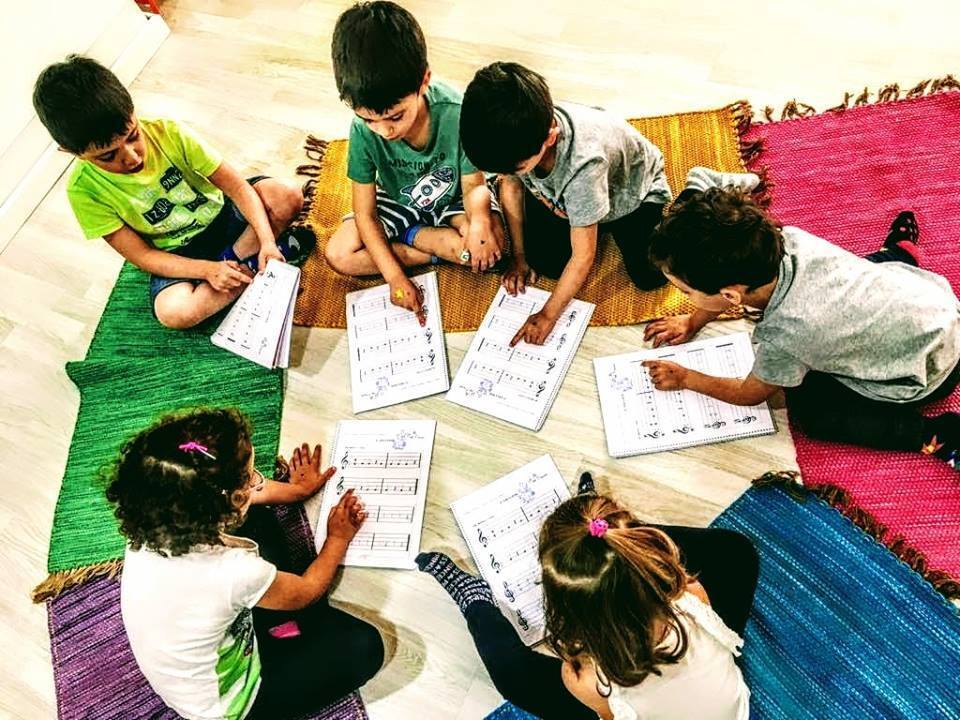
Sessions usually last 30 minutes once a week. During that time the activities follow one another briskly: the children sing songs from the method, practise pitch, internalise rhythms, play imitation games, work on laterality and psychomotor skills, perform short choreographies and use small percussion instruments.
The variety is no accident. At these ages we need to change focus to maintain engagement, but each activity links to the method’s objectives. A song can develop pitch and memory; a movement can reinforce pulse and coordination; a story can introduce a musical-language concept.
From the age of 3, and always progressively, children can begin to approach their first sheet music. They learn to follow visually what is happening, respect waiting times, relate symbols to sounds and gradually understand what they had previously experienced by singing and playing.
Do you have to want your child to become a musician to enrol them in music lessons?
No. Some families enrol because their children show a particular interest in music, while others simply want music to be part of their education. Both reasons are valid.
If in the future the child decides to study an instrument, they will have built a foundation of listening skills, rhythm and musical language. If they choose another path, they will have enjoyed an artistic activity that draws on attention, coordination, memory, expression, creativity and social skills.
In this video you can see some of the aural work we do from an early age.
Aural development from early childhood
Hearing is not the same as learning to listen.
An important part of musical education consists of learning to distinguish, remember and recognise sounds with ever greater precision. That’s why aural development occupies a central place within the Diapason the Wizard Musical Method from the earliest ages.
Within that work there also appears absolute pitch: the ability to recognise or produce a specific musical pitch without needing to hear another reference note first. For example, identifying a C or singing a G without someone first playing a note to guide us.
Absolute pitch is not a requirement to be a good musician nor does it replace other essential abilities, such as relative pitch, rhythmic sense or expressiveness. However, a well-trained ear can make musical tasks easier, such as tuning, singing, recognising pitches, remembering sounds and better understanding what is heard.
At Diapason the Wizard we develop these skills progressively through songs, intonation, repetition, recognition games and listening experiences adapted to each age. It’s not about testing the child, but about giving them many opportunities to listen attentively and respond musically.
The ear can be trained too, and the earlier it becomes part of a child’s musical experience, the more natural it is to work with it.
Music and child development
What does music bring during childhood?
We don’t need to ascribe miraculous effects to music to recognise its value. Learning music is a complex activity that engages listening, the body, memory, attention, emotion and social interaction all at once.
Attention and memory
Remembering songs, anticipating changes and repeating sequences requires active listening and sustained attention.
Coordination and psychomotor skills
Moving to a pulse, dancing, playing percussion or responding to a sound cue connects hearing, the body and action.
Creativity
Music creates space to imagine, vary, improvise, play with sounds and find different ways to express oneself.
Social skills
Making music with others involves listening, waiting, participating, imitating, proposing ideas and taking part in a shared activity.
Patterns and organisation
Rhythm and musical language work on sequences, temporal relationships, repetition, change and recognising structures.
Our motto
All children can learn music for their own greater benefit.
Music does not have to be only the start of a profession. It can be a valuable part of education and life.
A methodology that grows with them
From the baby who listens to the child who begins to read music.
The method accompanies the child’s development, gradually introducing new challenges while keeping listening, the voice, movement and play at the heart of learning.
From the first months
Listening and discovering
Voice, bonding, movement, contrast, rhythm and auditory stimulation within a shared musical experience.
Around 2 years old
Imitating and recognising
The child reproduces songs and patterns, anticipates, recognises sounds and progressively increases their participation.
From 3 years old
Understanding and reading
The characters and materials help introduce notes, note values, staff, clefs and first scores.
During childhood
Making music
Singing, listening, reading, measuring, interpreting and understanding become integrated into an increasingly independent musical experience.
The first pupils
Pablo and Sara grew up with the method.
Paqui Castro’s children were the first youngsters with whom Diapason the Wizard was developed. The methodology evolved with them by observing which activities worked, how they responded to the content and how they could progress musically without losing the naturalness of learning.
Over time both pursued professional musical careers. Pablo Ferrández, cellist, and Sara Ferrández, violist, are today internationally recognised performers. Their careers do not mean that every pupil of the method must become a professional musician; they are part of the history of a methodology that was created precisely to teach music to two children from a very early age.

Exclusive materials
Resources created to maintain continuity with the method.
Diapason the Wizard has original songs, stories, characters and educational resources developed to support the different contents of the children’s musical method.
These materials help the teacher maintain a coherent pedagogical approach and allow many learning elements to reappear at different times and in different contexts. To learn more we have created a dedicated Educational Resources.
Diapason the Wizard near you
Where to find classes of the Diapason the Wizard Musical Method.
The method is taught by teachers and centres trained in the methodology. You can consult our directories to find baby music classes and early childhood music classes.
Frequently asked questions
About the children’s musical method and classes for babies.
What is a children’s musical method?+
What is an early childhood music education method?+
At what age can a baby start music classes?+
What is the difference between musical stimulation and learning music?+
How long do classes of the Diapason the Wizard method last?+
At what age do children start to read music?+
Where can I find teachers or schools specialising in Diapason the Wizard?+
The best way to understand the method is to attend a class.
Find a teacher or school specialising in Diapason the Wizard and discover a musical education designed to support babies and children from their first encounters with music.